


SØVNVITENSKAP
Underoverskrift
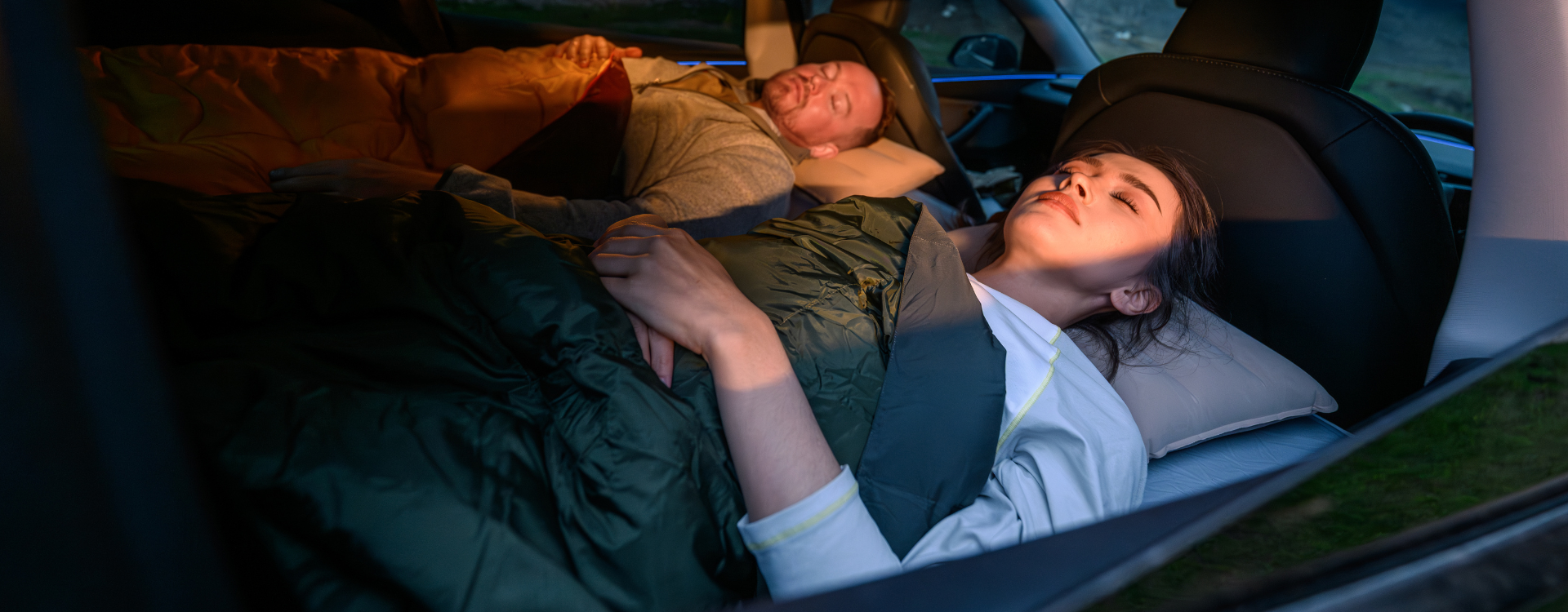
Bilen din er et lukket system. Det meste av søvnutstyr tar ikke hensyn til det.
Et kjøretøy parkert over natten er ikke et telt. Luften beveger seg ikke, temperaturen svinger 20°F mellom midnatt og daggry, og det du sover på fungerer enten med disse forholdene eller mot dem. Vi designet Havnby for bilen.



Miljøet inne i en parkert bil
Hva skjer med luften mens du sover?
De fleste tenker på komfort. Miljøet gjør sitt eget uansett. En forseglet bil om natten konsentrerer biproduktene fra pusting raskere enn de fleste forventer, og madrassen du ligger på gjør enten dette verre eller gir deg et stabilt underlag for å håndtere det.
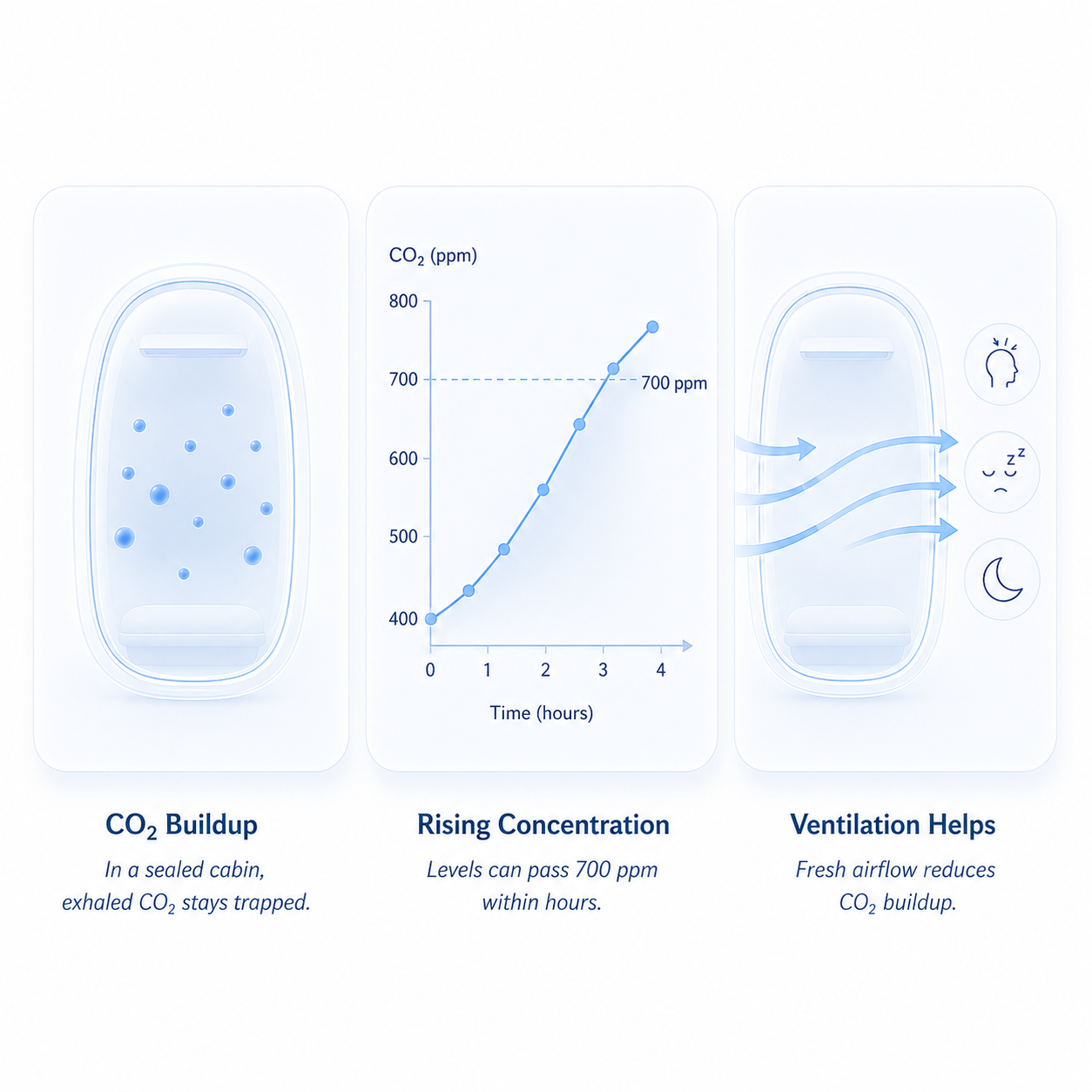
CO₂-opphopning
En enkelt person puster ut omtrent 200 ml CO₂ per minutt. I en lukket hytte stiger konsentrasjonen forbi 700 ppm — punktet hvor hodepine, sløvhet og redusert søvnkvalitet begynner — innen noen timer. Løsningen er ventilasjon, ikke en bedre pute.
Fuktighet og kondensasjon
Å puste frigjør fuktighet. I en kald bil kondenserer denne fuktigheten på vinduer og overflater — inkludert det du sover på. Sovende overflater som fanger fuktighet skaper en ond sirkel: våtere overflate, lavere kroppstemperatur, dårligere søvn.
Temperatursvingning
Metall og glass holder ikke på varmen. En bil som føles behagelig kl. 22, kan være 8–11 °C kjøligere kl. 04. Termisk motstand (R-verdi) på madrassen din avgjør hvor mye av dette du merker. Tynne luftmadrasser gir nesten ingen.
Ujevn soveflate
Foldede SUV-seter heller fremover — ofte 8–12°. Selv små hellinger får kroppen til å flytte vekten gjennom natten, noe som øker trykket på hofter og skuldre. Det som føles ubetydelig kl. 23, føles alvorlig kl. 03 etter langvarig trykk.
Hvorfor luftmadrasser svikter utendørs
Fysikken bak overnaturlig deflasjon
Standard luftmadrasser er ikke laget for camping. Feilene som kan virke som produktfeil, er faktisk forutsigbar fysikk som fungerer akkurat som forventet.
Temperatursammentrekning (den vanligste "lekkasjen")
Luft trekker seg sammen når den kjøles ned. Et fall på 10°F over natten forårsaker 3–4 % trykktap — nok til at det føles som en langsom lekkasje. Dette skjer i alle luftmadrasser hver kalde natt. Det er ikke en feil; det er den ideelle gassloven.
PV = nRT — samme luftvolum, lavere temperatur = lavere trykk
Ventillekkasje
Ventilen er det punktet med størst belastning på enhver oppblåsbar gjenstand. Den beveger seg hver gang du snur deg. De fleste ventiler har en designet toleranse for langsom luftlekkasje. Over en hel natt akkumuleres denne toleransen — og forverres etter hvert som ventilen eldes.
Sømtretthet fra rulling og bretting
Bilcamping innebærer gjentatte pakke- og pakk-opp-sykluser. Sømmer sprekker ved brettelinjer. En madrass som fungerte fint hjemme, svikter etter 10 campingturer fordi den har blitt komprimert, brettet og blåst opp fra kaldt flere titalls ganger.
Ritualet med påfyll klokken 3 om natten
Mange bilcampere har med seg en pumpe for å fylle opp midt på natten. Dette er ikke en midlertidig løsning — det viser at luftmadrasser alene ikke fungerer som sovealternativer i miljøer med varierende temperatur.
Hvordan Havnby er bygget annerledes
Ingeniørarbeid for et spesifikt miljø
Våre produkter tar for seg de faktiske feilmodusene — ikke symptomene. Hvert teknologivalg kan spores tilbake til et reelt problem vi observerte i bilcamping-sammenheng.
FlatCore nivelleringssystem
Justerbare luftkamre sitter under det skumstoffbaserte sovepartiet. De kompenserer for hellingen på sammenlagte SUV-seter — du justerer nivået fra innsiden av bilen, og sover deretter på skummet. Luften er ikke sovepartiet ditt; det er en kalibreringsmekanisme.
Skum-først konstruksjon (ingen deflasjonsoverflate)
I Core Series-produkter sover du på høydensitetsskum — ikke på luft. Det eliminerer helt trykktap over natten. Vakuumkomprimeringen er for lagring; når den rulles ut, er det skummet som støtter deg. Ingen pumpe. Ingen trykktester. Ingen feil.
Skumtoppen på SnugNest hybrid
SnugNest-produkter bruker luft som et verktøy for volum og form — men soveoverflaten er alltid skum. Hvis trykket endrer seg i løpet av natten, opprettholder skumtoppen komforten. Du sover ikke på vinyl. Den hybride tilnærmingen kombinerer pakkbarheten til luft med påliteligheten til skum.
TPU-overflatemateriale
Termoplastisk polyuretan er vanntett, motstandsdyktig mot temperatursvingninger og lydløs ved bevegelse. Det absorberer ikke kondens, lager ikke de klebrige/knirkende lydene som PVC gjør i kaldt vær, og tåler flere års utendørs bruk.
Spesifikk passform for kjøretøy
Generiske madrasser etterlater hull ved hjulbuene eller tar ikke hensyn til setets hengselgeometri. Hvert Havnby-produkt er målt for et spesifikt kjøretøy. En madrass som passer riktig fordeler vekten jevnt — hull skaper trykkpunkter uansett hvor god skummen er.
Vårt serviceengasjement
Hva du støttes av
Produktet er en del av systemet. Det som skjer etter at du har kjøpt det, er like viktig som natten du sover på det.
60 dagers søvnprøve
Du trenger mer enn én natt for å finne ut om en madrass fungerer. 60 dager betyr at du kan teste den under forskjellige forhold — temperatur, reiselengde, kjøretøy. Hvis den ikke passer, tar vi oss av returen.
3 års garanti
Dekker produksjonsfeil og materialsvikt i 3 år fra kjøpsdato. Ikke en "begrenset garanti" som utelukker det som faktisk svikter. Full dekning, dokumentert i klart språk.
Installasjonsveiledninger
Kjøretøyspesifikke videogjennomganger viser oppsettet i din eksakte modell. Tilgjengelig i vårt kundesenter — ingen behov for å lete gjennom generelle vanlige spørsmål for å finne det som gjelder for deg.
Re:Haul videresalgsprogram
Certifiserte brukte Havnby-produkter til reduserte priser. Hvis du oppgraderer, tar vi imot ditt gamle. Hvis du kjøper ditt første, er Re:Haul et rimeligere alternativ med samme kvalitetskontroll.